Blueberry Lemon Sourdough Bread
Highlighted under: Sweet Indulgences
When I decided to experiment with sourdough, I knew I wanted something fresh and fruity, and thus, Blueberry Lemon Sourdough Bread was born. The tangy notes of lemon perfectly complement the sweet bursts of blueberries in every slice. I found that the key to a successful loaf is letting the dough ferment slowly, allowing the flavors to develop beautifully. This bread is not only a visual treat with its vibrant hues, but it also brings a delightful aroma to my kitchen that lasts long after baking.
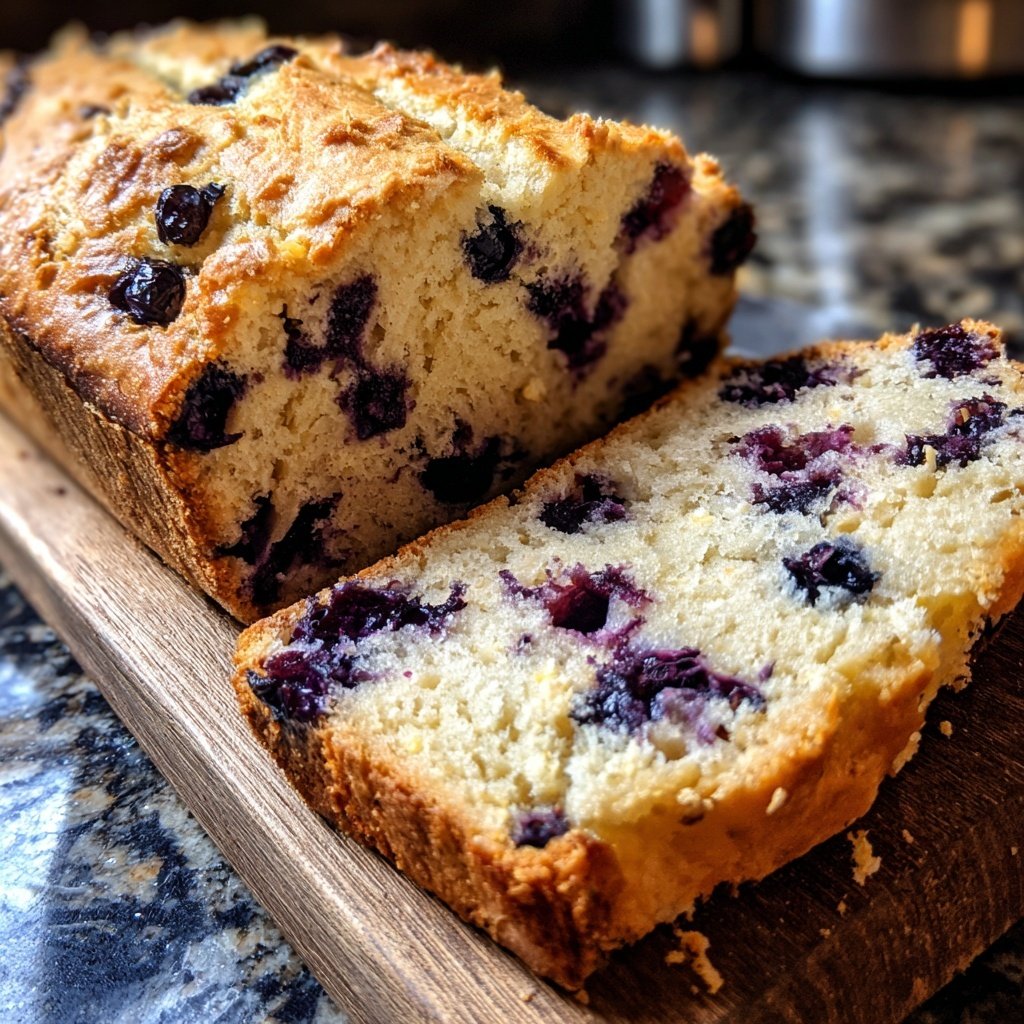
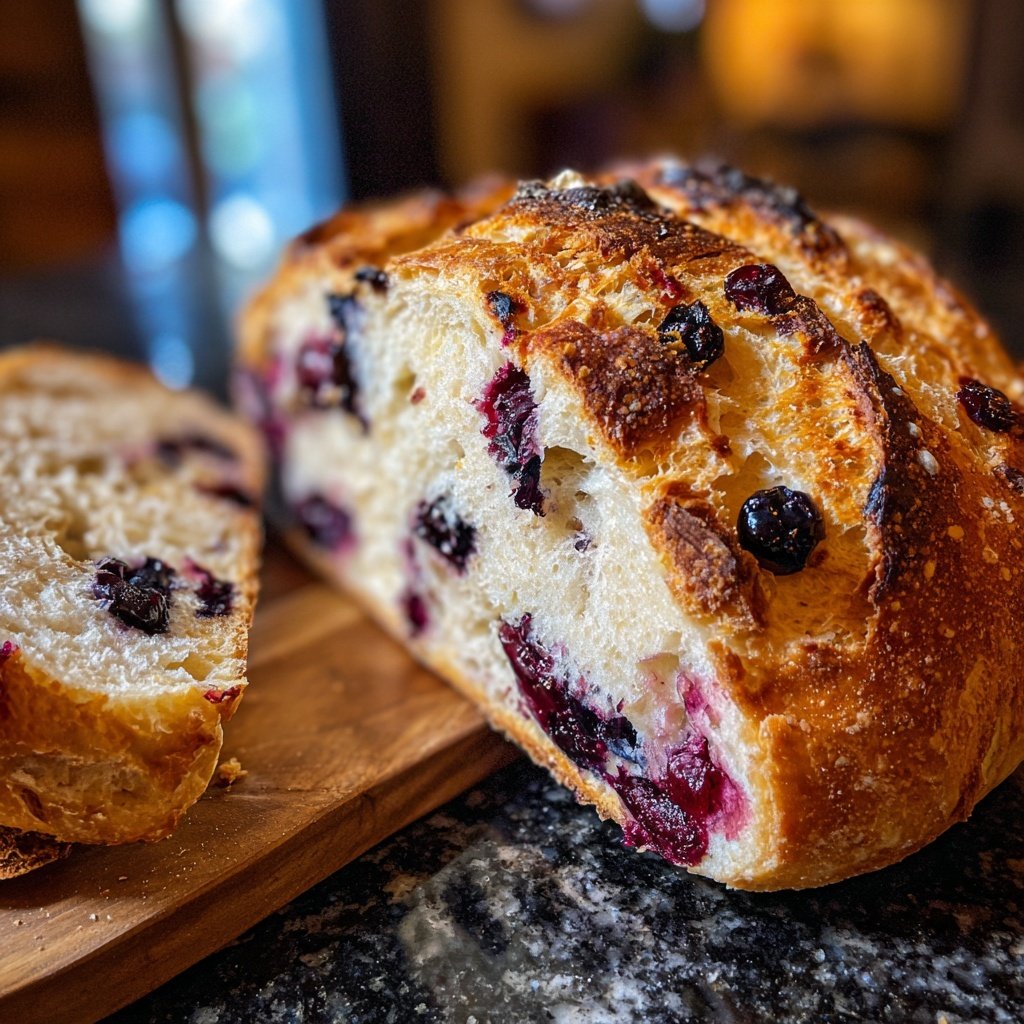
As I pulled my first loaf of Blueberry Lemon Sourdough Bread from the oven, the intoxicating aroma filled my home. The golden crust was calling to me, and the moment I sliced through it, I was greeted with a tender interior studded with plump blueberries. I remember the first bite; the tang of the sourdough mixed with the sweetness of berries was an explosion of flavor that I won’t soon forget.
It’s also important to note that letting the dough autolyse helps develop the gluten structure, resulting in a chewy yet tender texture. I recommend using fresh blueberries for the best outcome, as frozen ones tend to become mushy. This loaf is a great way to bring a touch of summer to any day!
Why You'll Love This Recipe
- The perfect balance of tartness and sweetness
- A unique twist on traditional sourdough bread
- Ideal for breakfast or a special treat
Mastering Sourdough Fermentation
The magic of sourdough lies in its fermentation process, which allows the flavors to deepen over time. During the initial bulk fermentation phase, aim for a warm room temperature around 75°F (24°C) to promote active yeast growth. The first two hours are crucial; every 30 minutes, perform stretch and folds to strengthen the dough. This gentle technique helps develop gluten structure, ensuring your bread rises beautifully and maintains its shape.
If your dough seems sluggish and isn't rising as it should, consider the temperature and hydration levels. Cooler environments can slow fermentation, while dough that is too dry may inhibit yeast activity. Adding a little extra water can often help. Keep an eye on your dough – look for bubbles forming on the surface and an increase in size as signs of readiness.
Adding Flavor with Blueberries and Lemon
In this recipe, fresh blueberries not only provide a burst of sweetness but also contribute moisture to the bread. When folding them into the dough, do so gently to avoid crushing the berries, which could release excess juice and affect the dough's structure. If fresh blueberries are unavailable, you can use frozen ones; just toss them in some flour before adding to minimize excess liquid.
The lemon zest is an essential component, as it infuses the bread with a bright, citrusy aroma that complements the sweet blueberries. Be mindful not to include the bitter white pith when zesting, as it could detract from the overall flavor. The zest should be finely grated to release its essential oils, ensuring a pleasant lemony taste in each bite.
Storing and Serving Your Bread
After cooling, it’s best to store your Blueberry Lemon Sourdough Bread in a paper bag or a bread box to maintain its crust’s crispiness. Avoid plastic bags, which can cause the crust to become chewy rather than keeping it crisp. This bread will stay fresh for about three days at room temperature, but you can freeze it for longer storage – slice it beforehand for easy thawing.
For serving, this bread makes a delightful breakfast option. Toast a slice lightly and spread some butter or cream cheese on top, but don't stop there. Pair it with a fresh fruit compote or a drizzle of honey to enhance the flavor further. Experimenting with various toppings can elevate this unique loaf, making it a versatile addition to your table.
Ingredients
For the Dough:
- 500g bread flour
- 350g water
- 100g sourdough starter
- 10g salt
- Zest of 1 lemon
- 200g fresh blueberries
Steps
Mixing the Dough
In a large mixing bowl, combine the bread flour, water, and sourdough starter until just shaggy. Let the mixture rest for 30 minutes to autolyse.
Incorporating the Ingredients
After the autolyse, sprinkle salt and lemon zest over the dough. Mix well, then gently fold in the fresh blueberries.
Bulk Fermentation
Cover the bowl and let the dough rise for about 4 hours at room temperature, performing stretch and folds every 30 minutes during the first two hours.
Shaping the Dough
Once the bulk fermentation is complete, turn the dough out onto a lightly floured surface and shape it into a round loaf.
Proofing
Place the shaped dough into a floured banneton and cover it with a cloth. Let it proof for 1 hour.
Baking
Preheat your oven to 450°F (232°C) with a Dutch oven inside. Once hot, carefully place the dough inside and bake for 30 minutes covered, then another 15 minutes uncovered until golden brown.
Cooling
Remove the bread from the oven and let it cool on a wire rack for at least 1 hour before slicing.
Pro Tips
- For a burst of flavor, try adding a tablespoon of lemon juice to the dough. Make sure to use room temperature water to help activate the sourdough starter.
Troubleshooting Common Issues
If your bread doesn't rise adequately, ensure your sourdough starter is active and bubbly before use. A dormant starter can lead to a flat loaf, so it’s essential to feed it and allow it to ferment until it reaches its peak activity. Conduct the 'float test' by dropping a spoonful of the starter in water – if it floats, it’s ready to go!
Overbaking can lead to a dry loaf, so keep a close eye during the final stages. Look for a deep golden color and a hollow sound when tapping the bottom of the loaf. If you notice the crust is getting too dark, you can tent the bread with aluminum foil during the last 10 minutes of baking.
Scaling the Recipe
If you wish to make a larger batch, simply multiply the ingredient amounts while keeping the ratios consistent. For instance, if you double the recipe, remember to extend the bulk fermentation time slightly to accommodate the increased volume. Monitor the dough closely to ensure it has sufficient time to develop flavor and rise properly.
Conversely, if you want to make a smaller batch, halving the ingredients works just as well. Keep an eye on the fermentation times – smaller amounts may ferment more quickly, so it's important to adjust accordingly. This versatility allows you to tailor the recipe to fit your needs.
Delightful Variations
While blueberry and lemon make a fantastic pairing, consider experimenting with other fruit combinations. Raspberries or strawberries can be delightful alternatives. They're also great if you're looking for a slightly different flavor profile or seasonal fruits. Adjust the amount if using more or less juicy fruit to avoid altering the dough’s hydration.
You might also explore adding herbs like thyme or rosemary to bring a savory note to your bread. A pinch of dried herbs can complement the sweetness and enhance the overall experience, making your Blueberry Lemon Sourdough Bread unique each time you bake.
Questions About Recipes
→ Can I use frozen blueberries?
Yes, but be cautious as they can make the dough wetter. If using frozen, it's recommended to thaw and drain them first.
→ How can I make my sourdough starter stronger?
Regular feedings with equal parts water and flour will boost its strength. Aim to feed it at least once a week.
→ What should I do if my dough is too sticky?
Try adding a bit more flour gradually or use wet hands to handle it during shaping.
→ How do I know when my bread is done baking?
The bread should be a deep golden brown, and it should sound hollow when tapped on the bottom.
Blueberry Lemon Sourdough Bread
Created by: Cassidy Moore
Recipe Type: Sweet Indulgences
Skill Level: Intermediate
Final Quantity: 1 loaf
What You'll Need
For the Dough:
- 500g bread flour
- 350g water
- 100g sourdough starter
- 10g salt
- Zest of 1 lemon
- 200g fresh blueberries
How-To Steps
In a large mixing bowl, combine the bread flour, water, and sourdough starter until just shaggy. Let the mixture rest for 30 minutes to autolyse.
After the autolyse, sprinkle salt and lemon zest over the dough. Mix well, then gently fold in the fresh blueberries.
Cover the bowl and let the dough rise for about 4 hours at room temperature, performing stretch and folds every 30 minutes during the first two hours.
Once the bulk fermentation is complete, turn the dough out onto a lightly floured surface and shape it into a round loaf.
Place the shaped dough into a floured banneton and cover it with a cloth. Let it proof for 1 hour.
Preheat your oven to 450°F (232°C) with a Dutch oven inside. Once hot, carefully place the dough inside and bake for 30 minutes covered, then another 15 minutes uncovered until golden brown.
Remove the bread from the oven and let it cool on a wire rack for at least 1 hour before slicing.
Extra Tips
- For a burst of flavor, try adding a tablespoon of lemon juice to the dough. Make sure to use room temperature water to help activate the sourdough starter.
Nutritional Breakdown (Per Serving)
- Calories: 230 kcal
- Total Fat: 4g
- Saturated Fat: 1g
- Cholesterol: 0mg
- Sodium: 200mg
- Total Carbohydrates: 46g
- Dietary Fiber: 2g
- Sugars: 8g
- Protein: 6g